

 5 min read
Contributors:
Mary Hayes, Ph.D.
Director of Research, People & Performance
Jared Northup
Research analyst, People & Performance
Most employees say they work off the clock, and some do it a lot. But all this unpaid effort can have downsides for both workers and their organizations.

For most workers, it’s normal to put in a few unpaid hours once in a while. People with a lot on their plate might toil through their lunch break on occasion or stay late to get caught up.
In fact, a large group—62 percent of workers worldwide—told us they put in up to five hours of unpaid work each week.1
And that other 38 percent? Well, they’re working off the clock, too. But they’re doing it even more. A lot more. Twelve percent of respondents to our Global Workforce Survey said they work without pay for 16 or more hours a week.
Why do they do it? Our data suggests that many workers put in extra time because they want to, not out of a sense of obligation. People who claimed the greatest number of unpaid hours also showed higher on-the-job engagement and were more likely to find meaning in their work.
But there were downsides, too, in the form of greater stress and a higher likelihood of turnover. The upshot? All that unpaid time isn’t necessarily a win for employers.
Who’s working off the clock?
While we found differences by age, geography, and work location, the biggest determinant of unpaid hours was job level.
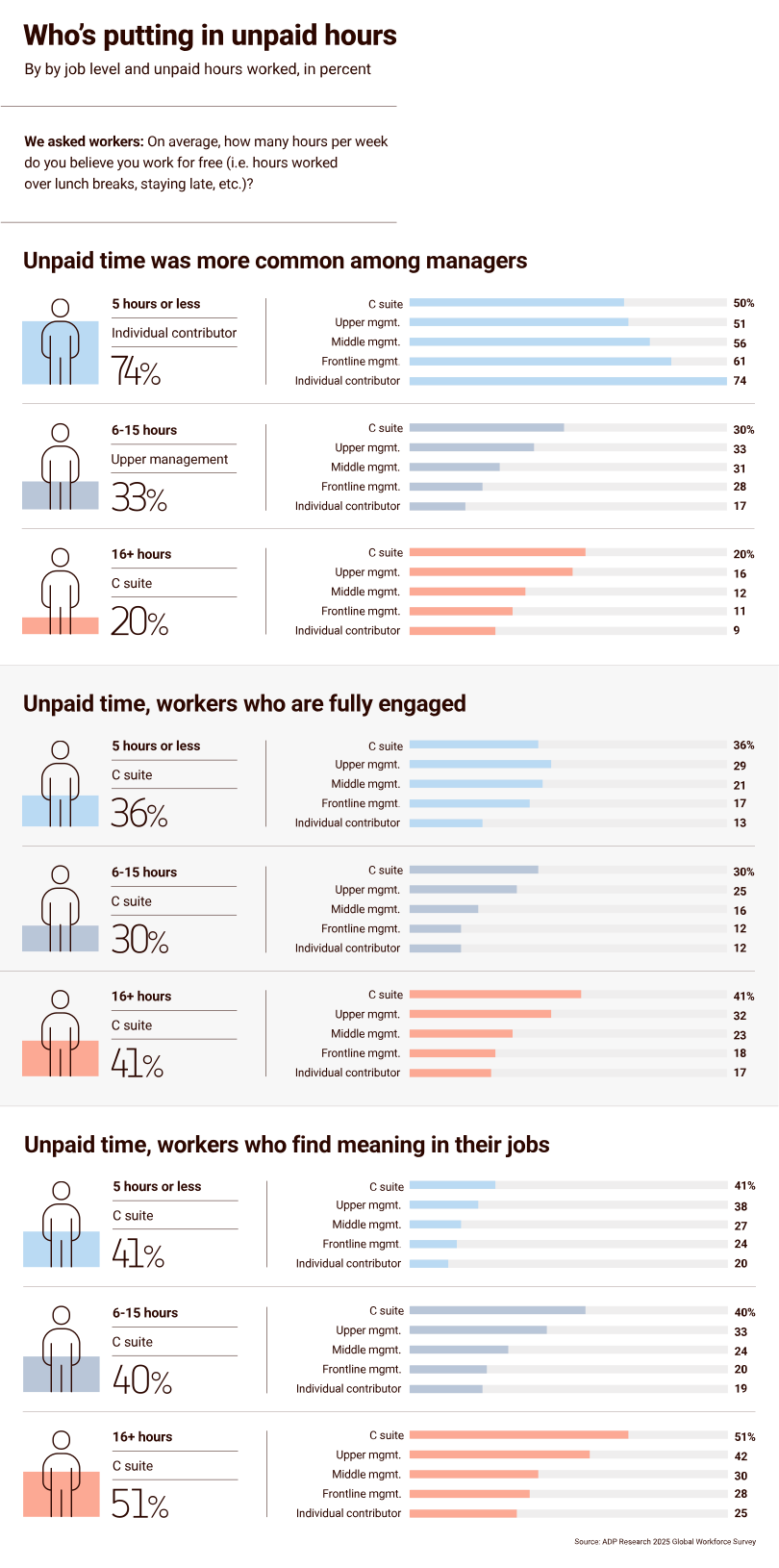
We had expected individual contributors to claim that they sometimes worked without pay. But we found something else: Workers higher in the organizational hierarchy were more likely to report putting in unpaid hours.
The difference was dramatic. Half of all upper managers and senior leaders said they put in at least six extra hours per week; 20 percent said they put in 16 hours or more.
People near the bottom of the organization were the least likely to report large blocks of unpaid work hours. Twenty-six percent of individual contributors said they put in six hours or more of free time a week, and only 9 percent said they worked off the clock for 16 hours or more.
The people who put in lots of hours off the clock might not mind doing it. While employee engagement dipped slightly among workers who claim to put in six to 15 unpaid hours a week, it rose to its highest level among those who clock 16 hours or more. This pattern held across all job levels.
People who said they put in 16 or more of unpaid hours also were the most likely to say with confidence that they find meaning in the work they do.
It’s possible that workers in the middle range of six to 15 unpaid hours see the time as an obligation or burden, while those who put in even more hours might be doing so simply because they want to.
Lower productivity
All those unpaid hours don’t lead people to feel more productive, however. As the number of reported unpaid hours increased, so did the share of workers who said they didn’t feel as productive as they could be. This sentiment was most dramatic among upper managers and C-suite executives.
More stress
As workers put in more unpaid hours, they’re more likely to feel stress and less likely to be thriving on the job. While this pattern held across all job levels, it was most dramatic among C-suite executives and upper managers.
Higher turnover
As noted above, people putting in the most unpaid hours were most likely to be fully engaged and finding meaning in their work. But they also were more likely to be looking for the next job.
Again, this relationship was particularly prominent among executives and upper managers.
While workers who put in a lot of unpaid time are more likely to be engaged, they’re less likely to be thriving. This dynamic might be one reason workers report an intent to leave. Even people who are engaged can suffer from a buildup of stress.
The takeaway
Employers might not be aware of how much their workers are toiling off the clock. This free work might come at a cost.
While people who put in large numbers of unpaid hours were more engaged at work, they also reported feeling less productive, were less likely to be thriving, and were more likely to be looking for their next job.
Organizations might want to evaluate how much time their teams, especially their executives and managers, are putting in. There might be opportunities for employers to compensate for, say, off-hour meetings or travel to job sites. Or employers might simply want to reduce workloads.
The bottom line is this: Unpaid work doesn’t necessarily benefit organizations.
What employers can do. Provide clear expectations. People who told us they put in five or fewer unpaid hours each week were more likely than heavy off-the-clock workers to say they clearly understand what’s expected of them. When workers know what they need to accomplish, they might be more efficient and more productive.
What workers can do. Assess the value of your unpaid time. Explain what you do during your off-the-clock hours and work with managers to determine whether or how to incorporate this effort into the paid workday. Or simply stop working when you’re not getting paid for it.
For more on this story, please see Today at Work 2026, Issue 1 .
Contributors:
Mary Hayes, Ph.D.
Director of Research, People & Performance
Jared Northup
Research analyst, People & Performance