

 5 min read
Contributors:
Mary Hayes, Ph.D.
Director of Research, People & Performance
Jared Northup
Research analyst, People & Performance

For the first time in history, five generations are sharing the workplace. From teenagers to great-grandparents, these workers are presenting employers with new challenges and opportunities.
In 2025, global growth was steady and global labor markets were stable. Still, workers were living through change. Artificial intelligence entered the workplace, and more employers ordered people back to the office.
So, even with a steady economic backdrop, workers were uneasy. Only 26 percent of people we surveyed worldwide were confident they have the skills needed to advance. Nearly half thought it was difficult or more difficult to change jobs than it was a year ago. Our survey also revealed high levels of stress related to pay, financial stability, and artificial intelligence.1
Within this data, wide generational gaps abound. Never have five generations, spanning teenagers to great-grandparents, been active in the workforce at once.
And the share of older workers has been growing for decades as life expectancies rise and fertility rates fall. Labor force participation for workers 55 to 64 rose to 60 percent in 2022, up from 53 percent in 1991, according to the International Labour Organization.
Our survey findings highlight the differences in perception of work between older and younger employees. Older workers were more likely than other age cohorts to doubt their skills. They were the least likely to feel supported by their colleagues and employers. And they were more likely than other workers to feel financially insecure and unfairly paid. At the same time, older workers reported feeling less stressed in their jobs than their younger colleagues.
At the other end of the age spectrum, the world’s youngest workers are living a completely different narrative. Adults 26 and younger, who made up 13 percent of the global workforce in 2022, were optimistic about their prospects and confident in the value of their training and skills.
In short, our data shows that work looks very different to people depending on their age. Employers can learn from and adapt to these differences to bring out the best in their teams.
Today we look at older workers, who are the most likely of all age groups to doubt their on-the-job skills. They’re the least likely to feel supported at work and they’re more likely to feel financially insecure and unfairly paid. Tomorrow, we’ll show how different the world looks to their young counterparts.
The predicament of the aging worker
The world’s share of older workers has been growing for decades as life expectancies rise and fertility rates fall. In 2022, 21 percent of people in or near traditional retirement age were still employed, according to the International Labour Organization.
Work looks very different through the eyes of these older employees than it does to their younger colleagues. Our 2025 survey shows that people 55 and older were more likely than all other age groups to doubt their job skills. They were the least likely to feel supported by colleagues and employers. And they were more likely to feel financially insecure and unfairly paid.
As these people remain in the labor market, employers could be missing out on opportunities to help them deliver their best.
Measuring opportunity
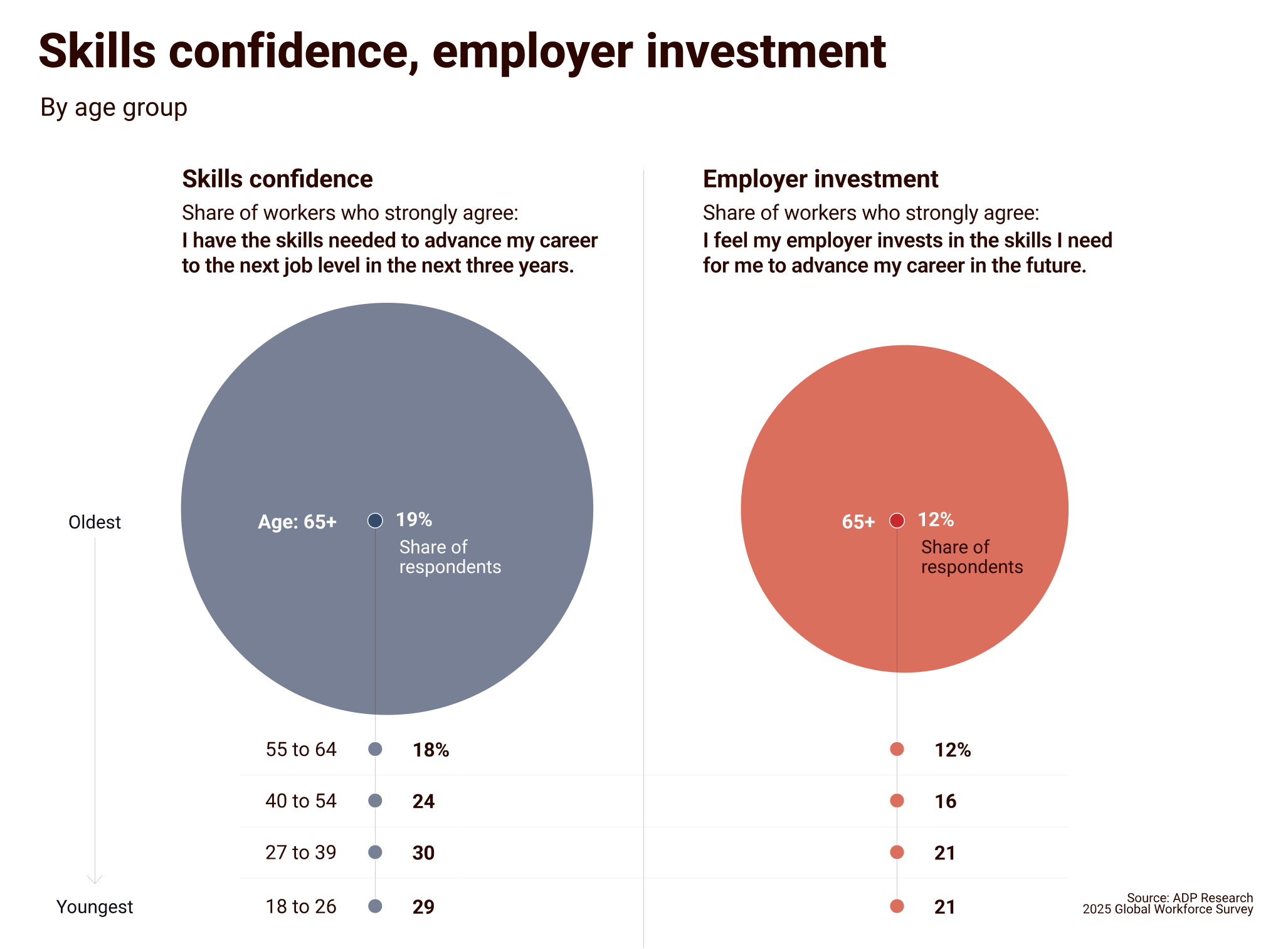
Only 18 percent of workers 55 and older strongly agree they have the skills needed to advance in their careers. Even fewer think their employer is investing in their development. These are the smallest shares across all age groups.
On-the-job support
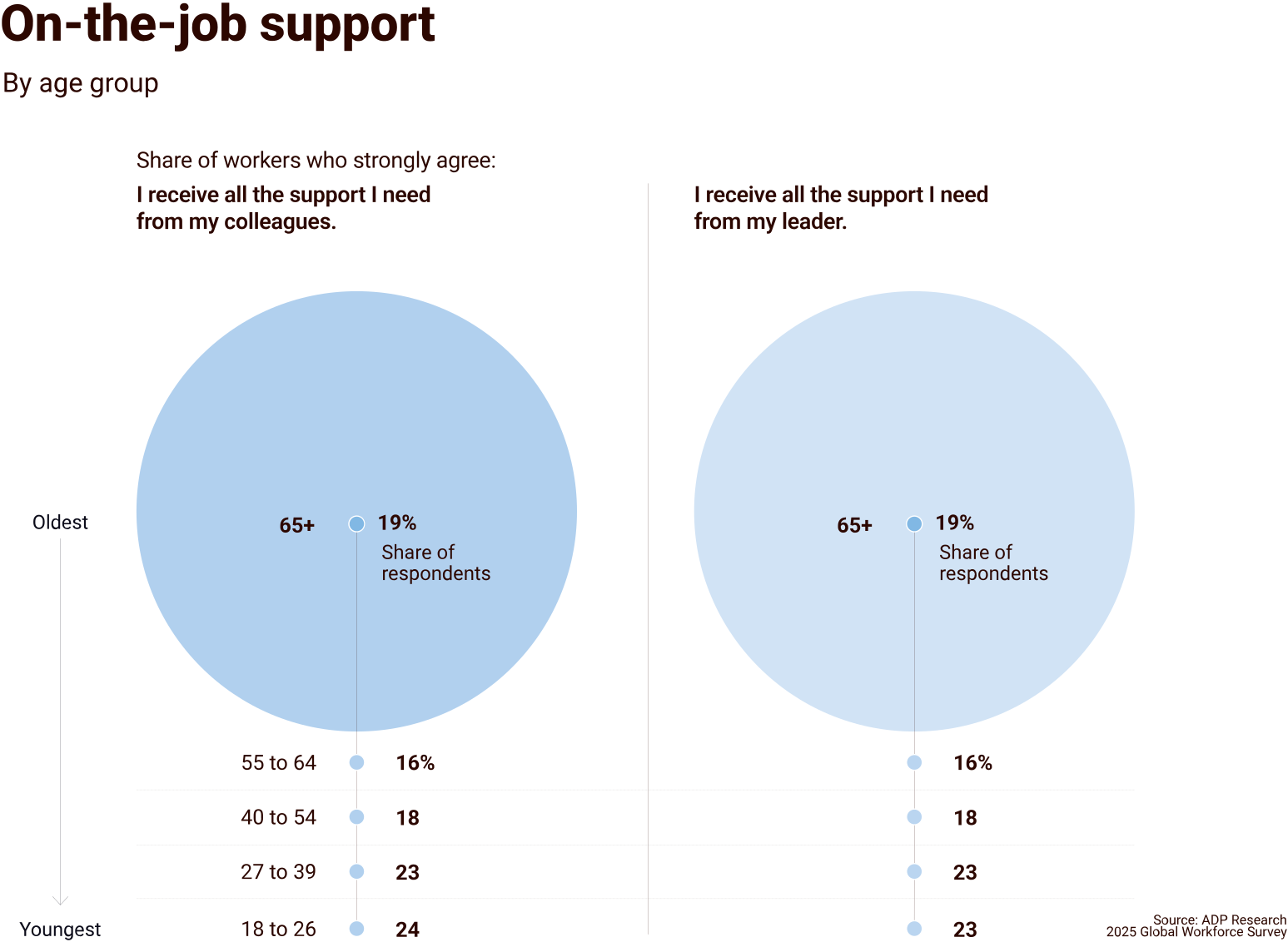
As people age, they’re less likely to feel supported by their work colleagues and supervisors. ADP Research data shows that the more people feel supported, the more engaged they are at work.
Financial security
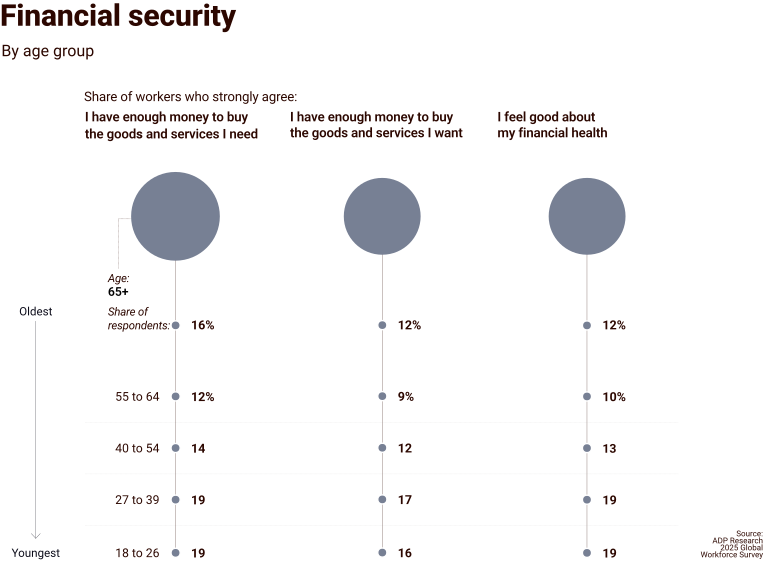
Older workers were less likely than their younger colleagues to say they have the money to cover their needs and wants. In fact, they’re less likely to feel good about their overall financial health.
One might think that people in their 40s, 50s, and 60s would have reached higher pay brackets. But this group also might be worried about having enough money for retirement, a child’s school tuition, or an elderly parent’s care.
Although feelings of financial insecurity rise steadily with age, the pattern reverses slightly for workers 65 and older. It’s possible that some people in this oldest group continue to work because they want to, not because they need to.
Older workers also were more likely to say their pay was unfair. And our oldest survey respondents were the least likely to have received a pay increase in the past year and the least optimistic about getting one in the coming year.
A silver lining
There’s one area where older workers had a distinct advantage. They were the least likely of all age groups to experience frequent negative stress on the job. Nearly a third of workers 55 to 64 and almost half of workers 65 and older said they experience negative stress at work less than once a month, compared to only 13 percent of workers under 27.
Our research has shown that some people experience work pressure as a positive (eustress) while others experience it as a negative (distress). Based on these reactions, we sort workers into one of three categories: Thriving (mostly positive stress), rattled (a mix of positive and negative stress), and overloaded (mostly negative stress).
As workers get older, they’re more likely to be thriving and less likely to be overloaded.
For more on this story, please see Today at Work 2026, Issue 1.
Contributors:
Mary Hayes, Ph.D.
Director of Research, People & Performance
Jared Northup
Research analyst, People & Performance