



 3 min read
Nela Richardson, Ph.D.
Sometimes a single number can capture a major trend. Last month, we saw just such a number in the ADP payroll data. In March, organizations with fewer than 50 employees reported the lowest turnover they’ve had in the nine years we’ve tracked the data.
Over the last three years, labor turnover at private employers has been relatively stable, hovering in a tight range of about 4.7 percent, or nearly one person leaving for every 20 employees.
In March, however, turnover hit a new low at small employers, to 3.9 percent.
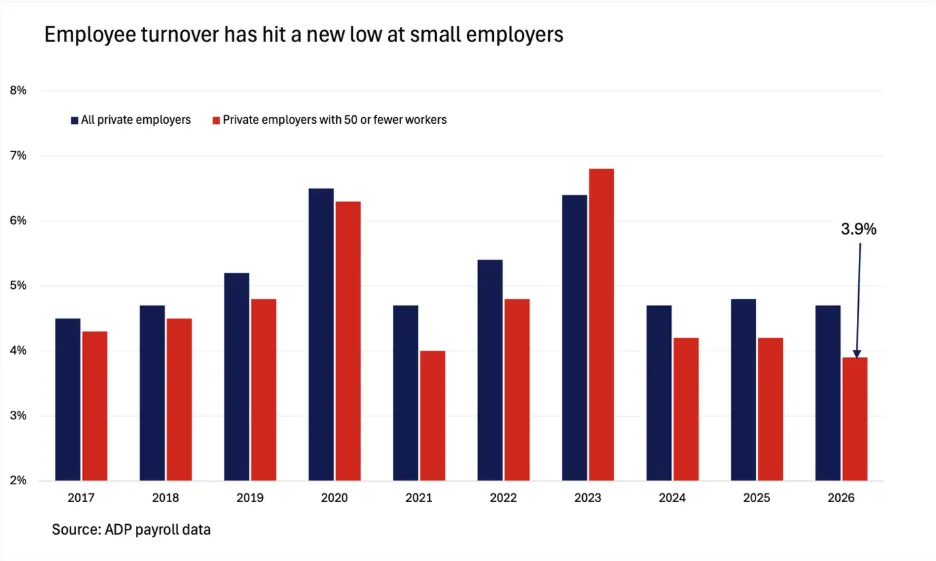
We calculate turnover by dividing the number of people who separated from an employer in the current month by the number of active employees at that employer in the prior month.
It’s a Goldilocks-type indicator for employers. When it’s higher than planned, employers incur the cost of replacing exiting workers and lost productivity as it hires, trains, and onboards new recruits. When turnover is too low, it could lead to hiring freezes, a slowdown in promotions, and even layoffs. Getting turnover just right is a critical component of talent management.
Low turnover also has an effect on the Main Street economy. In the short term, it can buttress the macroeconomy and support stable consumer spending. However, over time, turnover that is too low can dampen dynamism, reduce opportunities for new entrants into the labor market, constrict productivity, and slow wage gains as workers stay put.
The message of March turnover is clear in the short run and blurry in the long run. Small employers are signaling workforce stability. Whether their turnover is too low to be sustainable over the long term is an open question.
My take
The U.S. labor market is shaped by a basket of discrete decisions. Decisions to hire, let go, quit, or stay determine whether the market is dynamic and innovative or sluggish and stagnant.
Our current low-fire, low-hire labor market reflects both reduced turnover and slow decision-making. Uncertainty tied to higher inflation, artificial intelligence, geopolitics, and consumer sentiment is affecting workers and their employers, making both players in the labor market more cautious.
But small employers have made the decision to buck the low-hire trend this year. In February and March, they were responsible for nearly all private-sector U.S. job gains, according to ADP National Employment Report data.
Even as workers are staying put at the highest rates we’ve recorded, hiring by small employers signals a level of dynamism in the job market. Low-fire, low-hire stagnation might be on its way out.
THE NER Pulse
For the four weeks ending March 28, 2026, U.S. private employers added an average of 39,250 jobs a week. It was the fourth straight week of improvement in hiring.
These numbers are preliminary and could change as new data is added.
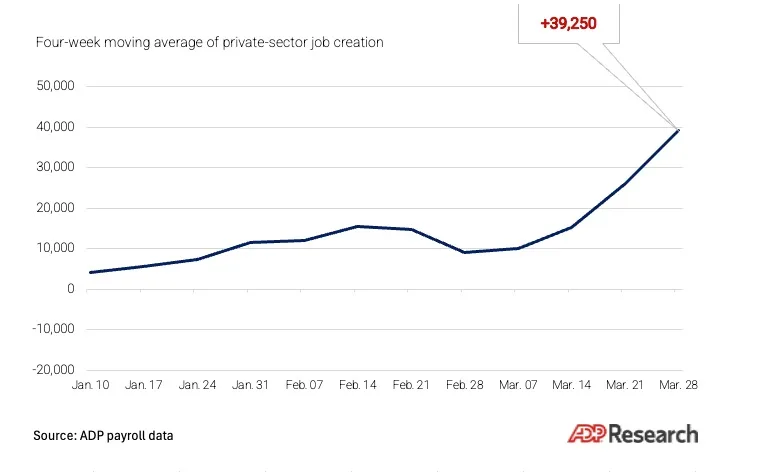
Three times a month, Main Street Macro releases the NER Pulse, an estimate of the week-over-week change in employment based on a four-week moving average. These releases are seasonally adjusted and have a two-week lag to allow for more complete and accurate estimates of real-time employment trends. At the beginning of each month, we publish the National Employment Report, which is built on a reference week that includes the 12th day of the month. We do not publish the NER Pulse during NER release weeks.
Download this week’s NER Pulse data
The week ahead
Monday. Existing-home sales slowed in March and are trending 1 million units fewer a year than they were five years ago despite solid job growth, according to the National Association of Realtors, which blames higher mortgage rates and low inventory for the market slowdown. With the spring buying season in full bloom, I’ll be watching to see if homebuyers start to come off the sidelines next month.
Tuesday. Economists are watching to see if high oil process are spilling into the wholesale prices paid by producers. The Bureau of Labor Statistics’ Producer Price Index also could be a leading indicator of price increases that eventually could hit consumers.
Thursday. Initial jobless claims, a proxy for layoffs, have averaged fewer than 225,000 per week for the last three years, consistent with very low turnover. This week’s reading from the Department of Labor likely will reaffirm that workers are staying put for now.