



 4 min read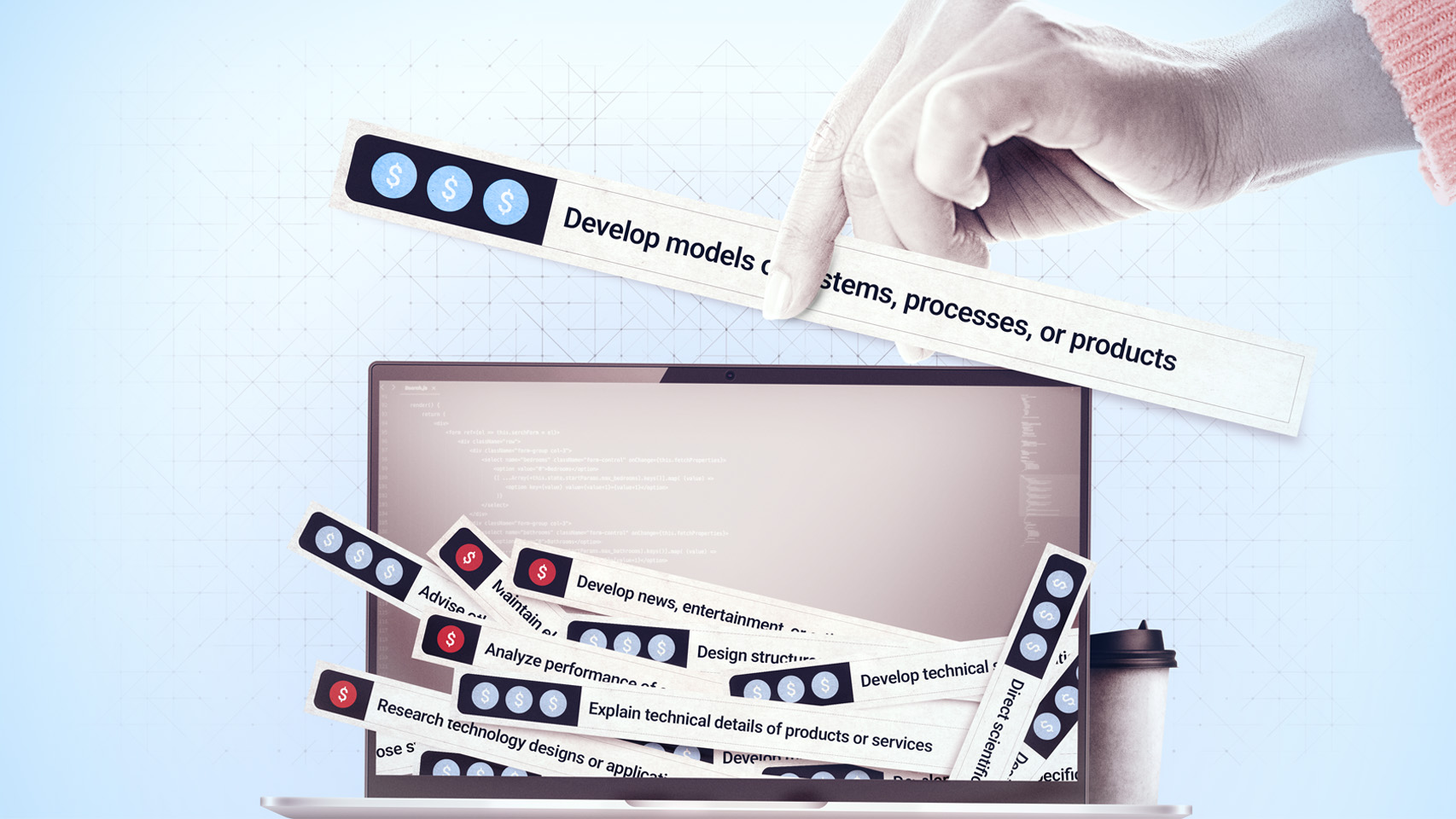
Nela Richardson, Ph.D. , Andrew Wang, Ph.D.
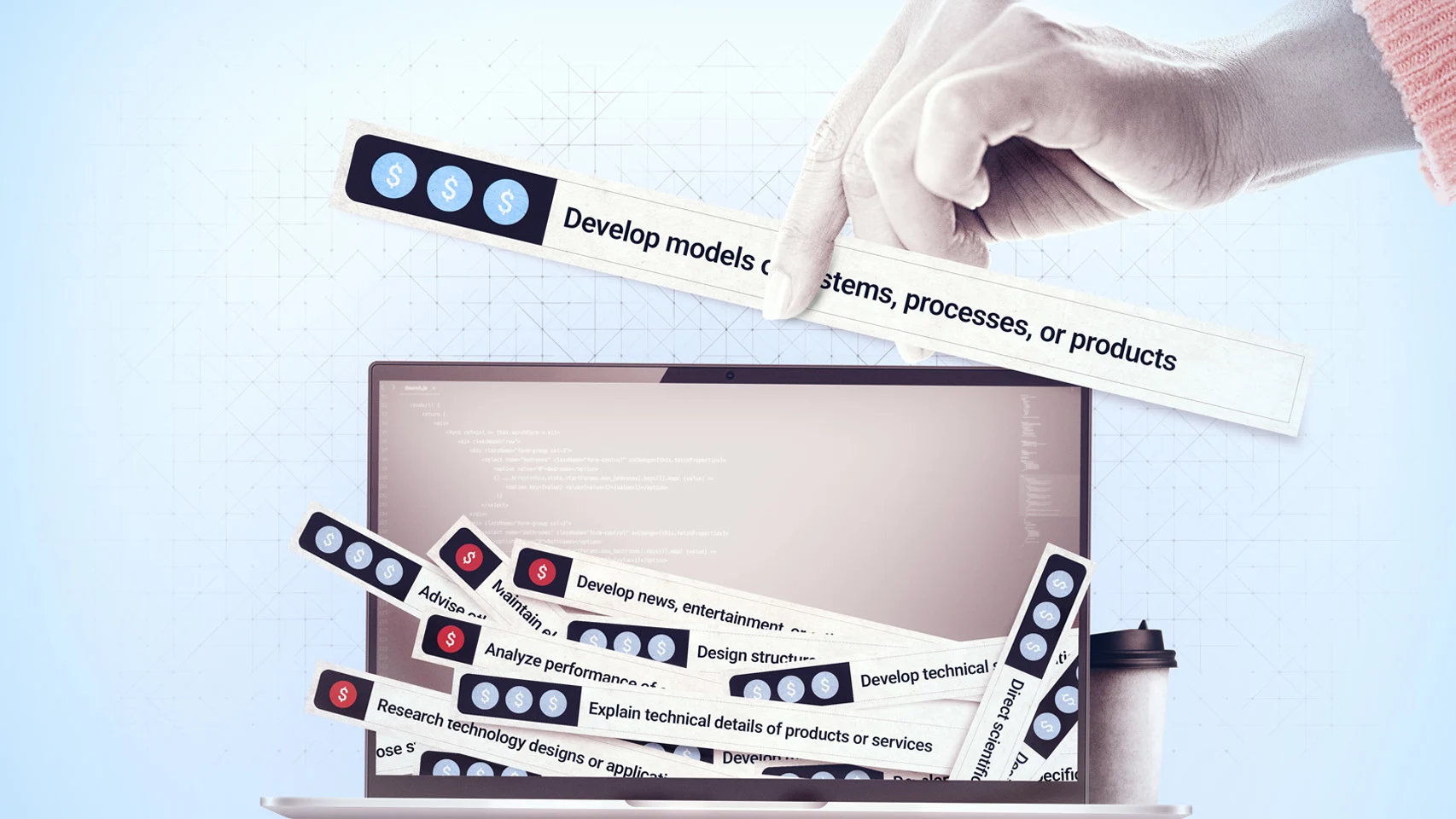
An analysis of wages and tasks in information technology jobs shows that high-value work is clustered around design and evaluation tasks, while more routine responsibilities such as maintenance and monitoring are associated with lower pay.
This analysis, from ADP Research and the Stanford Digital Economy Lab, also finds that certain IT work tasks are less valued by employers today than they were prior to 2022 and the first wide release of AI tools. Our research controlled for age, gender, and company differences.
These findings, based on a selected sample of IT jobs, offer an early proof of concept of our project on the great job unbundling, an investigation we announced at the World Economic Forum in Davos in January 2026.
As AI advances, employers, workers, and policymakers seeking to understand the labor market will need to look beyond job creation and destruction to focus on the changing value of discrete job responsibilities, those activities and tasks that make up everyday work. Which tasks are becoming more valuable? Which ones less?
Here’s a first look at our work.
Our findings
Starting with a dataset of more than 5 million job postings by ADP client employers linked to more than 9 million workers in ADP payroll data, we identified a sample of approximately 7,000 workers in selected IT jobs during the years 2019 to 2025. In total, the data represent more than 20,000 worker-year observations drawn from more than 600 employers.
We analyzed job posting descriptions of tasks and examined worker pay associated with the jobs in our sample. Using O*NET Intermediate Work Activity definitions, we identified a set of 25 activities associated with these IT jobs.1 Using a regression of worker wages on task indicators and controlling for age, gender, year-specific effects, and company-specific characteristics, we estimate the wage premium or penalty associated with each job task.
In our sample of IT jobs, the following tasks are associated with a higher wage:
- Advise others on the design or use of technologies
- Design databases
- Direct scientific or technical activities
- Design structures or facilities
- Design electrical or electronic systems or equipment
- Develop models of systems, processes, or products
- Explain technical details of products or services
- Develop technical specifications for products or operations
The following tasks are associated with a lower wage:
- Diagnose system or equipment problems
- Research technology designs or applications
- Develop news, entertainment, or artistic content
- Analyze performance of systems or equipment
- Maintain electronic, computer, or other technical equipment
- Monitor operation of computer or information technologies
When we compare pay in 2023-2025 (post-AI) to pay in 2019-2022 (pre-AI), we find the following tasks declined in value:2
- Diagnose system or equipment problems
- Develop models of systems, processes, or products
- Document technical designs, procedures, or activities
- Set up computer systems, networks, or other information systems
- Explain technical details of products or services
The takeaway
Instead of measuring employment and wages by occupation, the ADP-Stanford job unbundling project measures the quantity and price of job tasks to learn which ones are rising or falling in value, and which are becoming more or less prevalent.
Just as there’s supply and demand for workers by occupation, there’s a supply and demand for job tasks within and across occupations.
Existing data on U.S. employment and wages provide information on jobs aggregated by occupation, industry, geography, and demographic characteristics. Studies of the effect of AI on jobs and the future of work have focused mainly on occupations, because government data on employment and wages are available only at the occupation level.
But AI’s biggest and most immediate effect will be on tasks, not entire occupations. Jobs are bundles of tasks, and AI is changing the composition of those bundles.
Measuring the quantity and value of these workplace tasks will provide a detailed view into how AI is affecting work, workers, and pay. Our findings will help people identify the most valuable tasks within their occupations and make more informed decisions about education, training, and career advancement. Employers will obtain a tool for transitioning their teams into high-value work.
This project will give economists, policymakers, and business leaders a better understanding of labor-force supply and demand, one grounded in the activities and tasks that drive value.
Andrew Wang, Ph.D., is a research scientist at the Stanford Digital Economy Lab.