



 3 min read
Nela Richardson, Ph.D. , Liv Wang
Last fall, we told you about the record pay gap that separates the top and bottom earners. In 2025, we found that the gap had grown to 530 percent. That meant that, on an annualized basis, the top U.S. private-sector earners took in more than five times the wages of the lowest earners.
Today, we revisit that analysis, and the news isn’t good. Despite steady wage growth, the pay differential has continued to widen.
In April 2023, median pay for the highest-income earners was 590 percent that of the lowest earners. A year later, in April 2024, that differential had grown to 600 percent. And by April 2025, it was nearly 620 percent.
By April 2026, the top earners were making more than 6.4 times, or 640 percent, what low earners made. That’s near a record high set in December 2025, a month that includes a large percentage of low-paid seasonal workers, in data going back to 2019.
We conducted this research using the same methodology we employ for Pay Insights. We identified almost 14 million U.S. job-stayers, their annual gross pay, and their year-over-year change in pay. We define job-stayers as people who, in the current month, are employed at the same organization as they were 12 months ago.
Over the past two years, pay gains have been mostly stable for all income levels. Most recently, year-over-year pay gains for job-stayers as a whole edged down from 4.5 percent in March to 4.4 percent in April.
Year-over-year pay growth for the first, or bottom, quartile of earners edged down from 6.4 percent in March to 6.3 percent in April. For the fourth, or top quartile, pay gains dipped slightly from 3.8 percent in March to 3.7 percent in April 2026.
As we’ve reported before, low-wage earners got a big bump in pay during the pandemic-driven demand for front-line workers in retail and leisure and hospitality. Since then, their median pay growth has flattened, but this bottom quartile of earners continues to notch the fastest pay growth in percentage terms. It just hasn’t been enough to close the gap.
Our take
The good news is that pay gains have stabilized at robust levels for low-wage workers. The bad news is that despite this steady growth the gap between the highest- and lowest-earners continues to widen.
This dynamic is important for several reasons, including its impact on the U.S. economy.
Low-income consumers tend to spend most of what they earn, while high wage-earners save and invest more. For this reason, widening pay gaps drag down the economy’s growth potential as money becomes more concentrated among top earners.
Consumer spending drives the U.S. economy. But the composition of income levels in the economy plays an important role in the speed of economic growth.
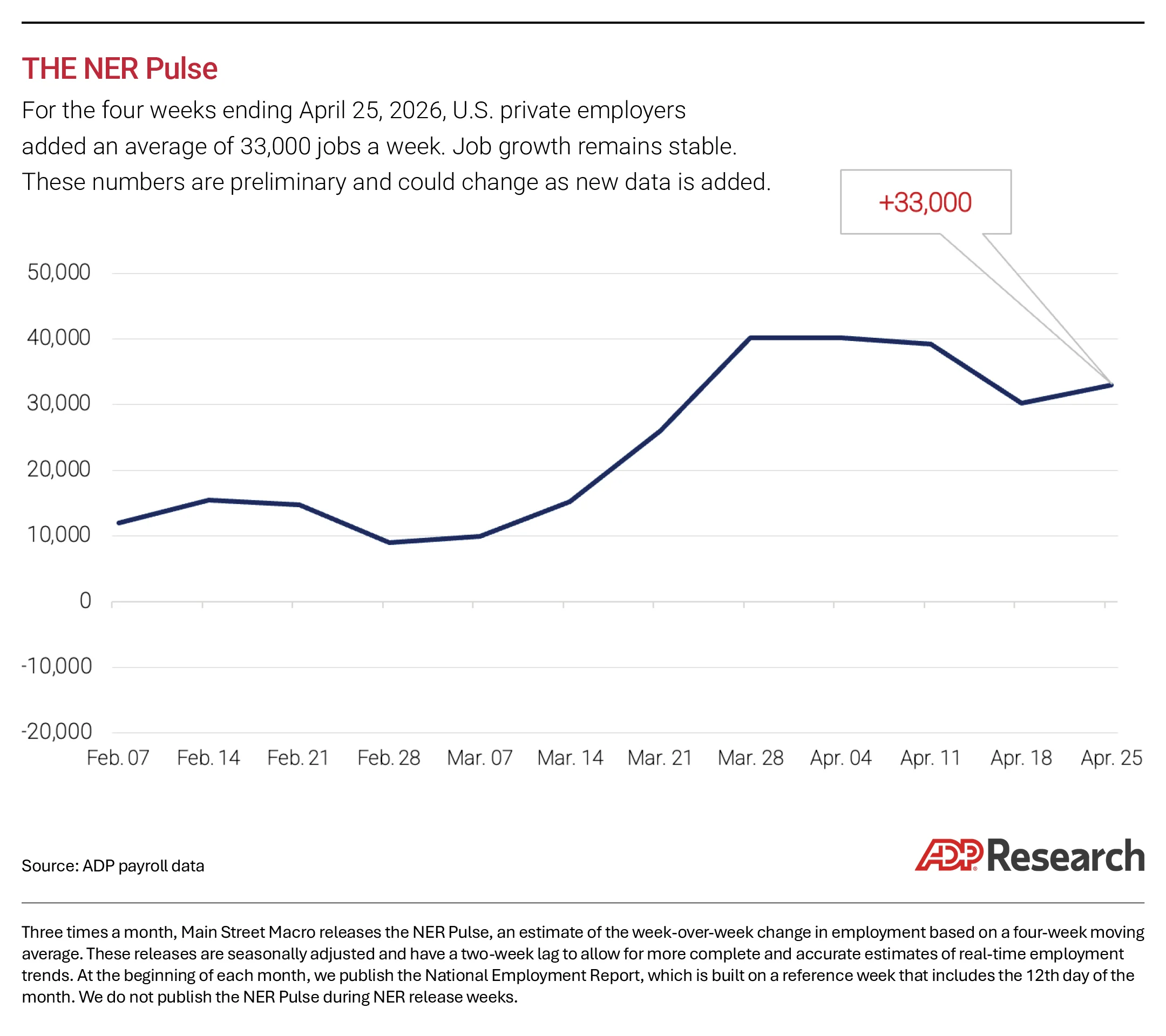
Download this week’s NER Pulse data

The week ahead
Monday. Attention will be on the consumer this week. With the spring home-buying season well under way, the National Association of Realtors reported flat existing home sales for April.
Tuesday. The Bureau of Labor Statistics will release April’s Consumer Price Index, a measure of inflation. Economists will want to know whether high energy costs are affecting the cost of other goods and services.
Wednesday. Any change in the BLS Producer Price Index will grab attention today, as economists look for signs of increasing inflation in input prices.
Thursday. April retail sales data from the Census Bureau will close out the week. Consumer spending is the biggest chunk of the economy, and this indicator will kick off the outlook for second-quarter GDP.