



 4 min read
Nela Richardson, Ph.D.
Summer is unofficially over. Schools have reopened, vacations are winding down, and people are returning to their regular routines. As work shifts back into normal gear, let’s take a read of our monthly gauge of worker sentiment.
Since 2021, our monthly Employee Motivation and Commitment Index measures how people are thinking and feeling about their jobs. And September’s results suggest that worker sentiment might be reflecting not only workplace experiences, but the broader macroeconomic environment.
Sometimes you bring work home. But sometimes you bring home – and the economy – to work.
What drives good vibes?
The EMC Index is built on our U.S. Monthly Worker Sentiment Survey of a stratified, random panel sample of 2,500 respondents and draws on more than a decade of ADP research into worker sentiment.
This body of research shows that employees with a strong sense of motivation at work and commitment to the job are people who feel most connected to their work, their colleagues, and their employer. We’ve learned that positive worker engagement is linked to certain job attributes, including purpose and knowledge of what’s expected; team and individual performance, support from coworkers and management, and confidence in their future success.
In September, the EMCI Index improved for the first time in five months, gaining one point to close at 127. Still, even with this improvement, it’s 21 points below where it was at this time last year.
Why do vibes change?
Worker sentiment shifts for myriad job-based reasons, including company performance, teammate churn, reorganizations, performance recognition (good) or slights real or perceived (bad).
Non-work factors, too, can influence employee sentiment, and some of these can be difficult to measure. One of the biggest is the economy.
When we look at the EMC Index by industry, we get a clue to how macroeconomic trends can affect worker vibes. Each month, sentiment within industries can swing by a lot. This month, industries were almost evenly split, with about half showing improvement and half showing weakness.
But real estate stood apart this month. This industry always tends to be more volatile than others, but in September the sentiment index for real estate professionals plummeted by 25 points to 84, its lowest reading since June 2023.
Real estate is one of the most interest-rate-sensitive and seasonally driven industries we track. The housing market rises and falls depending on the season, with peak sales occurring during spring and summer as buyers race to settle into new homes while school is out.
Recent housing data suggests that the industry’s current economic state might be affecting how its professionals feel about their jobs.
The cost of a 30-year, fixed-rate mortgage rose in September to its highest level since June 2025, according to data released last week by Freddie Mac. And the Mortgage Bankers Association’s Purchase Index of loan applications, a signal of homebuyer demand, has been trending downward since June.
National Association of Realtors data shows that sales of existing homes fell by 2 percent in August from July and are down 1.2 percent from a year ago. And sales of newly built homes slowed by 10.5 percent month-over-month in July and were down 6.3 percent from a year earlier, according to the U.S. Census Bureau.
The pace of construction is adding to the industry’s woes. The rate at which builders broke ground on residential construction fell 13.5 percent in July from a year earlier, Census data shows.
In short, it’s no wonder that real estate professionals are feeling the blues. Their jobs are directly affected by macro-driven trends, even if sentiment about their employers and colleagues hasn’t changed.
My take
People bring the economy to work with them. Negative, volatile, or uncertain macro trends can prompt workers to ask three important questions: Am I safe here? Do I know what is expected of me? Can I see a future for myself here?
The answers can depend more on what’s happening outside the workplace than in it.
As the real estate industry demonstrates, swings in demand, financing conditions, and inventory can influence how professionals feel about their jobs even when their thoughts on their employer and team haven’t changed.
In short, sentiment is more than a measure of workplace culture. It’s a lens into how workers are processing the economic environment around them.
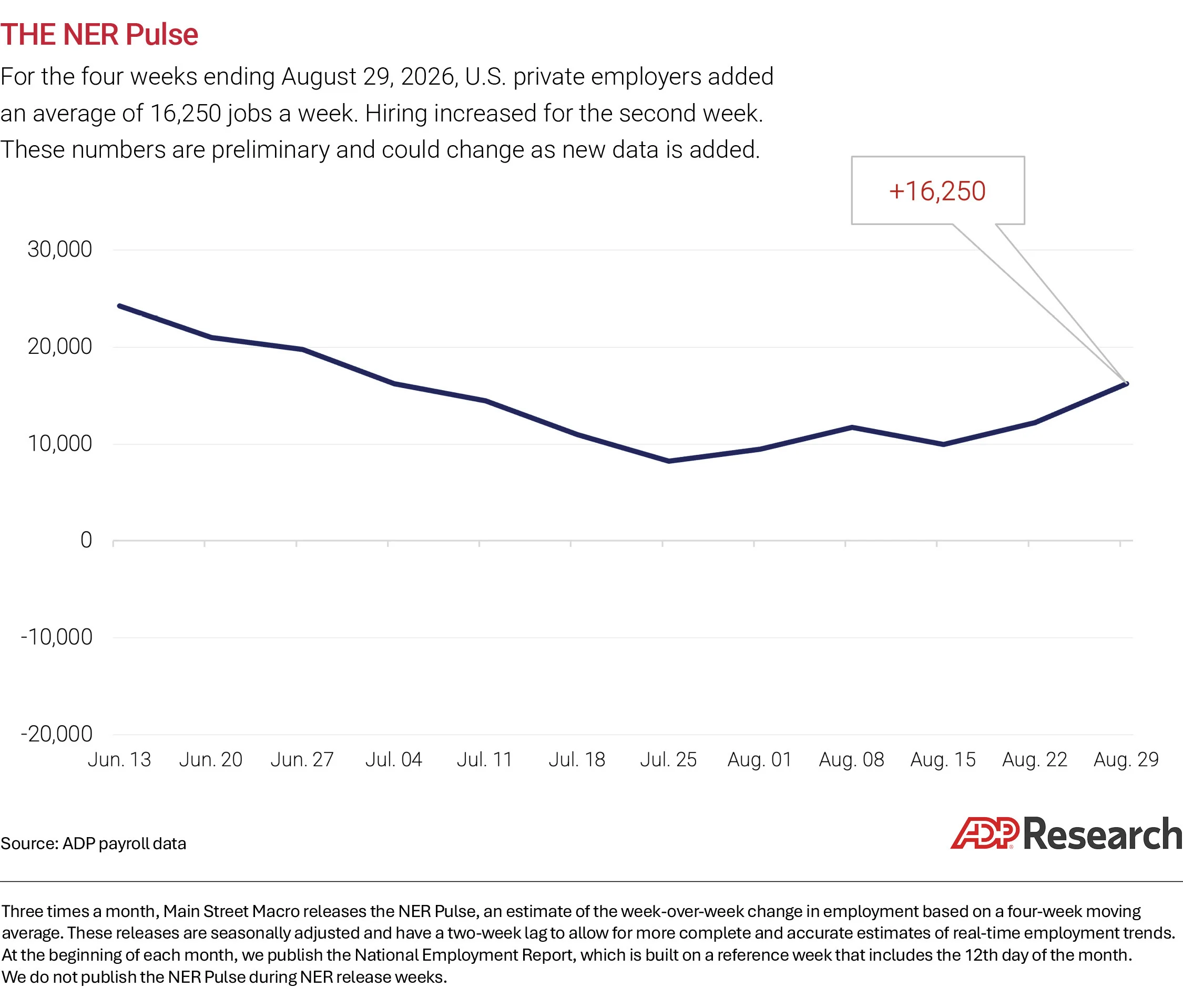
Download this week’s NER Pulse data

The week ahead
Wednesday. On a day when market-watchers will be dialed into the Federal Reserve rate decision, August retail sales data from Census will deliver an important economic signal on the state of the U.S. consumer.
Thursday. I’ll be watching August housing starts from Census to see if higher financing and labor costs continue to be headwinds for residential real estate.
Last week, we learned that the share of long-term unemployed people still looking for work climbed to 27 percent in August after dipping in July and is near a five-year high set in May, according to the Bureau of Labor Statistics. This share has yet to show up in Thursday’s initial jobless claims data from the Labor Department, which likely will remain near historic lows.