



 3 min read
Nela Richardson, Ph.D. , Jeff Nezaj
You know them or you know of them. They’re the people behind the scenes of all economic, industry, and market data, the folks who crunch the numbers and interpret the results. They are data scientists.
This week, we turned our lens from data to the people behind it, analyzing their pay trends and demographics. What we found was a healthy occupation, despite AI-related predictions to the contrary.
Using job titles found in ADP payroll data, we built a sample of more than 10,000 data scientists employed in the U.S. private sector from January 2021 through March 2026.
During that period, data scientists tended to be younger than U.S. workers as a whole. As of March 2026, the median age of data scientists is 39, compared to the national median of about 42. Nearly half of data scientists were between 35 and 54.
Data scientists also earn more than double the U.S. median wage, taking home an annual median pay of $130,000 in March 2026, compared to median income of less than $62,000.
Though the typical data scientist is well paid, salaries vary considerably, with the bottom 10 percent making $65,000 and the top 10 percent making more than $220,000.
Wage growth in this occupation slowed for a while. The year-over-year gain in pay hit 7.8 percent in both 2022 and 2023, a time in which the skill set of data scientists was in high demand and the overall labor market was churning as large numbers of people quit their jobs.
Wage growth for data scientists slowed considerably as the labor market stabilized in 2024 and 2025. And this year, wage growth has accelerated, signaling another potential wave of demand for these highly skilled workers.
Our take
Between 2024 and 2034, data science employment is projected to grow by a whopping 34 percent, according to the Bureau of Labor Statistics. That compares to just 3.1 percent growth projected for U.S. employment overall.
We hear what you’re thinking – but what about AI? How will advances in artificial intelligence affect demand for data scientists?
Glad you asked. AI advances are likely to transform data science jobs, as they will many other occupations. By automating routine tasks and amplifying pattern recognition, AI will be a helpful tool, even a teammate, for data scientists.
But though that kind of work takes a lot of time, it isn’t of the highest value. Investigating data, forming testable hypotheses, making discoveries, and adding to our body of knowledge – that’s where the real value of data scientists lies.
In the current decade, we think demand for occupations that provide a critical connection between data and artificial intelligence, jobs that expand our capacity to understand and solve complex problems, will continue to grow.
Main Street Macro won’t publish May 26, and the NER Pulse will be released in this space on May 27. Enjoy your Memorial Day weekend and we’ll see you again in June.
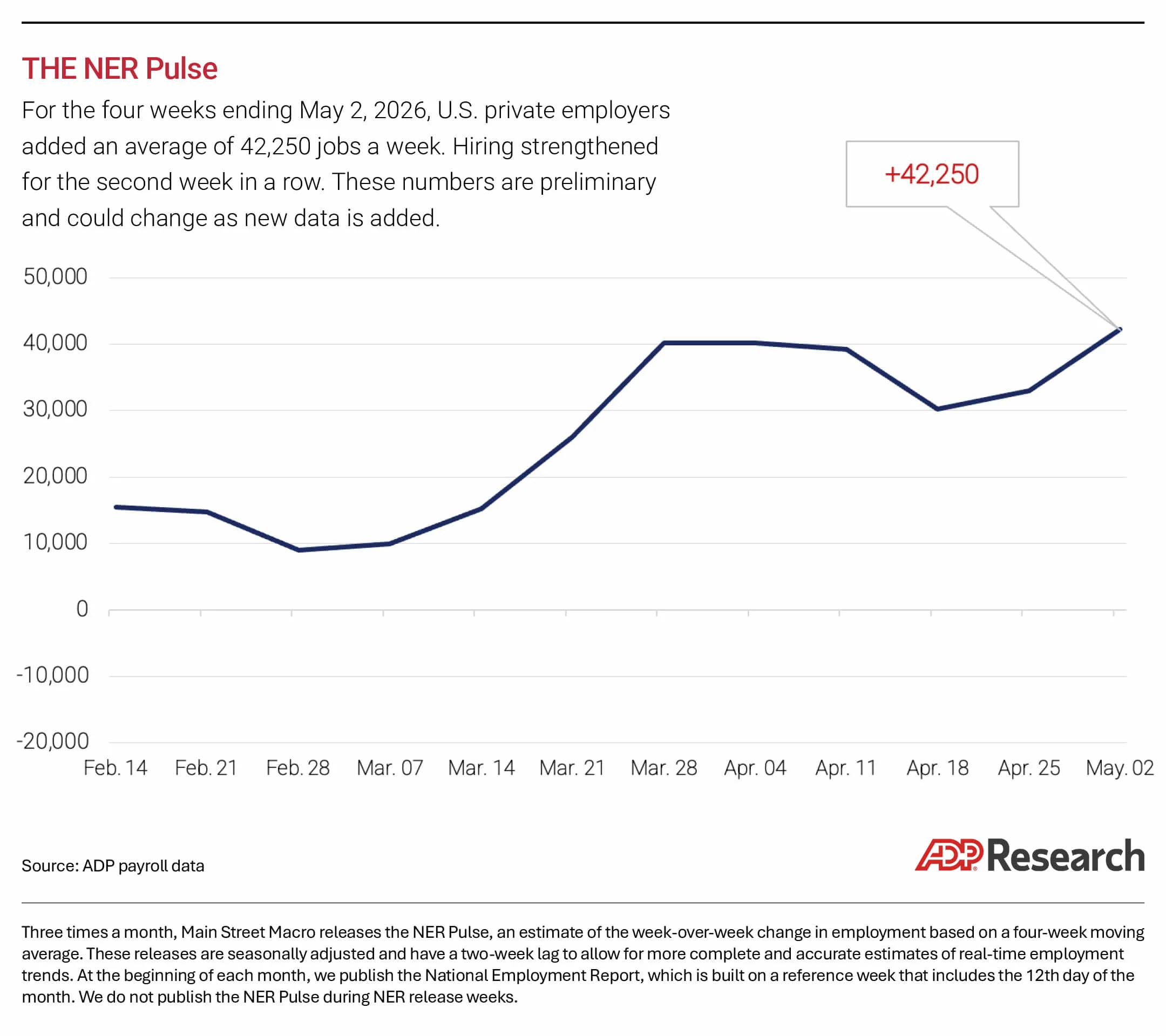
Download this week's NER Pulse data

The week ahead
Thursday. It’s a light week for economic data. The Census Bureau will deliver its report on April housing starts and building permits. So far, this year’s pace of new construction has been trending lower than last year’s.
Friday. The University of Michigan’s preliminary read of consumer sentiment hit a record low earlier this month. With inflation accelerating, the survey’s final read for May will be closely watched for further signs of weakness.