



 4 min read
Nela Richardson, Ph.D.
As central bankers gather in Jackson Hole, Wyoming, this week, the global economy again finds itself at an unusual moment.
Hosted annually by the Federal Reserve Bank of Kansas City, the Jackson Hole Economic Policy Symposium brings together central bankers, economists, academics, and policymakers from around the world to discuss the most important challenges shaping the global economy.
The gathering often serves as a venue for identifying the next big macroeconomic theme. This year, that theme might be the growing divergence in global monetary policy.
During the last two major global economic transitions, central banks moved together. As the global financial crisis intensified in late 2008, they cut rates in unison to stave off economic collapse. In the midst of the Covid-19 pandemic, they raised rates together to combat a historic surge in inflation.
Today, however, the world's monetary authorities increasingly are taking diverging paths. Some are raising rates, others are cutting them, and many are standing still.
Moving in lockstep
The 2008 financial crisis showed how quickly a shock originating in one country could spread across the world. Policymakers responded in kind.
In October of that year, the Federal Reserve, European Central Bank, Bank of England, Bank of Japan, and Bank of Canada all slashed interest rates to near zero. Smaller economies largely followed. In a deeply interconnected financial system, policy convergence was a necessity, not a choice.
The strategy worked. Growth stabilized, financial markets recovered, and inflation remained subdued.
The pandemic triggered another period of global monetary policy coordination, this time leading to coordinated rate hikes. Worldwide pandemic-driven shutdowns, crippled supply chains, labor shortages, and fiscal stimulus combined to trigger a sharp increase in inflation.
Central banks responded with one of the most synchronized tightening cycles in modern history. Many emerging-market central banks, particularly in Latin America, raised rates early, and policymakers in advanced economies, including the Federal Reserve, European Central Bank, and Bank of England soon followed.
For a time, the world was once again moving in lockstep.
Falling out of step
These synchronized cycles have largely ended.
The shared inflation shock that once united policymakers has faded. In its place are increasingly local economic realities. Wage growth, housing markets, demographics, fiscal policy, energy dependence, and consumer demand now vary significantly across countries.
The result has led to three different monetary policy themes.
The hikers. The European Central Bank and the Bank of Japan recently moved toward tighter policy. The ECB has grown increasingly concerned that energy costs and persistent services inflation could keep price pressures elevated. The Bank of Japan raised rates to their highest level since 1995 as wage growth and underlying inflation strengthened.
The cutters. Elsewhere, policymakers face a different challenge – economic weakness. The Swiss National Bank has cut rates as inflation weakens and the pace of growth stokes worry. Central banks in Brazil and several other emerging-markets also have lowered rates as inflation has cooled.
The holders. A third group has chosen patience. The Federal Reserve, Bank of England, and Bank of Canada largely have remained on hold while they continue to assess economic data. The pace of inflation has slowed, but policymakers remain cautious about declaring victory. Holding rates steady buys them time to evaluate and lowers the risk of a premature pivot.
My take
While the 2021-2022 inflation surge had global roots tied to the pandemic, today’s inflation challenges are increasingly local. Periodic energy-price shocks and geopolitical risks are affecting countries differently depending on their economic structure and reliance on imported energy. All of these factors have added to the complexity of monetary policymaking.
In short, the world is no longer telling one inflation story. It is telling several. And that divergence in global monetary policy might be the most important theme emerging from Jackson Hole this year.
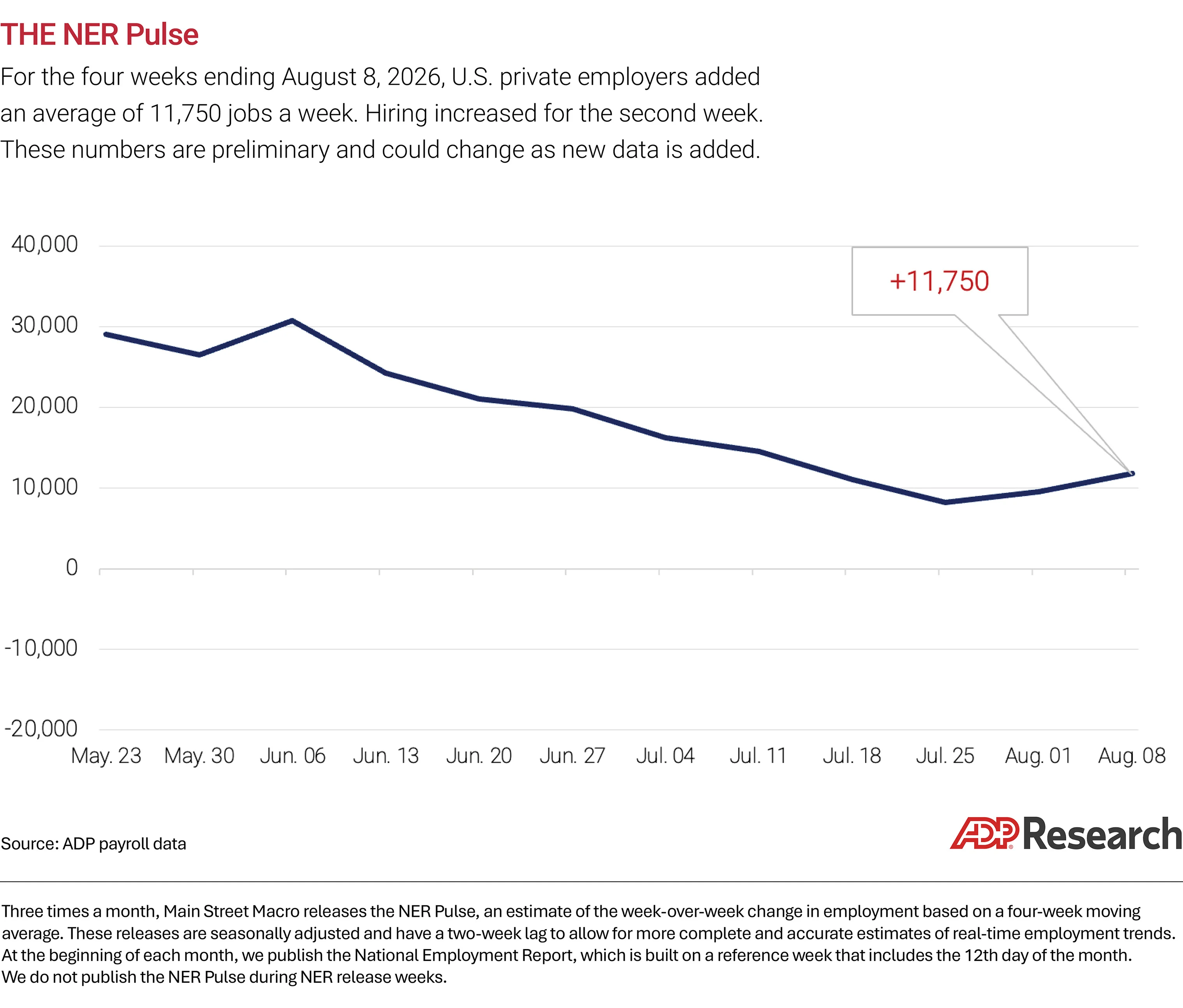
Download this week’s NER Pulse data

The week ahead
Wednesday. Housing remains one of the clearest examples of how higher interest rates continue to affect Main Street. New home sales and inventory were lower in June than a year ago, but so was the median sales price as builders used incentives and price cuts to attract buyers facing elevated mortgage rates. I'll be watching this week's permit and sales data from the Census Bureau to see whether affordability continues to improve at the margin.
Thursday. As the Jackson Hole symposium gets under way, markets will get a fresh round of economic data, including the latest on durable goods from the Census Bureau, revised GDP for the second quarter from the Bureau of Economic Analysis, and the Fed's preferred inflation measure, the Personal Consumption Expenditures Price Index, also from BEA.